March
St. Joseph
In the quiet of March, we honor St. Joseph, the "Just Man" chosen to be the guardian of the Redeemer. This month invites us to seek the intercession of the Patron of the Universal Church and to find spiritual dignity in humble labor, silent obedience, and steadfast protection of the sacred in our lives.
"When Joseph woke from sleep, he did as the angel of the Lord commanded him."
~Matthew 1:24
March brings the first signs of spring to South Texas—the bluebonnets start to peek through, and the days get longer. As the earth wakes up for a season of growth, we turn our eyes to St. Joseph, the husband of Mary and the foster father of Jesus.
In our parish communities, we know the value of an honest day's work. We respect the man who provides for his family without complaint and protects them without hesitation. St. Joseph is the patron saint of that quiet strength. He is the "silent saint" of the Gospels, never speaking a word, yet his actions speak louder than any sermon.
The Teaching: Guardian of the Redeemer
St. Joseph was given a task that no other man in history has ever held: to be the guardian of God Himself. The Church honors him not just as a helper, but as the Patron of the Universal Church. Just as he protected the Holy Family, he now protects the wider family of believers.
The Catechism of the Catholic Church highlights how crucial Joseph’s role was in God's plan.
Joseph teaches us that "serving God" doesn't always mean preaching in the streets. Often, it means doing your duty—faithfully, lovingly, and reliably—right where you are planted.
"God called Joseph to 'take Mary as his wife.' In this, he called him to give way to the eternal councils of the night... [Joseph] was called by God to serve the person and mission of Jesus directly through the exercise of his fatherhood." (CCC 437, 532)
The Scripture: Action Over Words
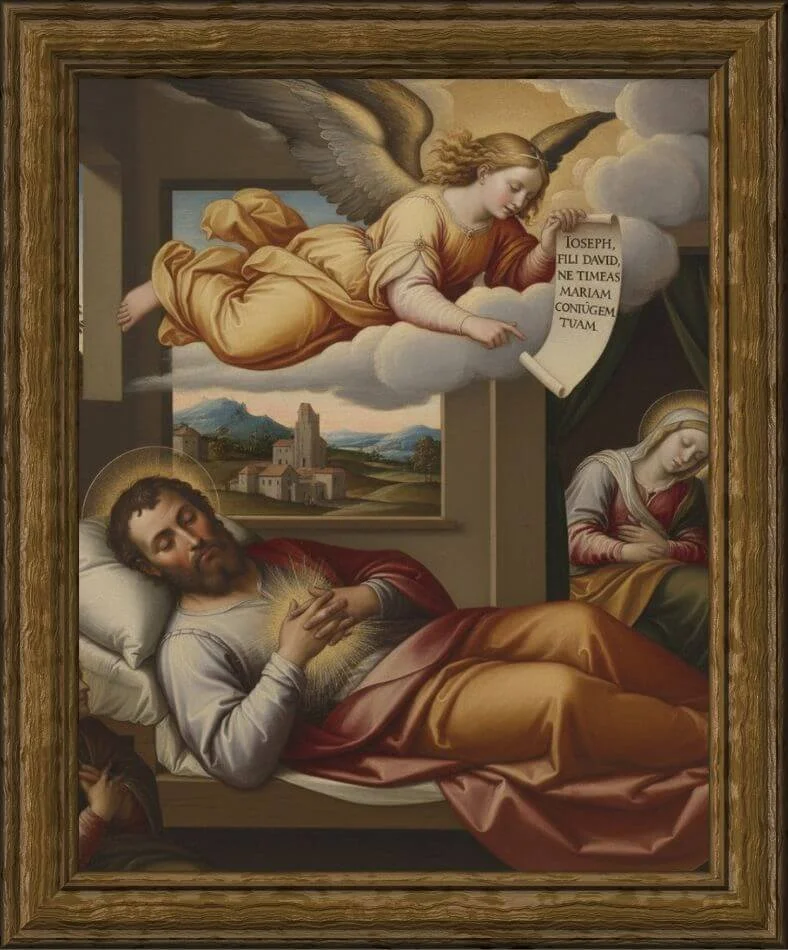
We often look for elaborate prayers or long speeches in the Bible, but St. Joseph offers us a different path. In the Gospel of Matthew, when the angel warns Joseph in a dream that Herod wants to kill the child, Joseph doesn't ask questions. He doesn't argue.
This describes a man of immediate obedience and profound courage. He was willing to leave everything behind—his home, his job, his comfort—to protect those entrusted to his care. He reminds us that true faith is an action, not just a feeling.
"He rose and took the child and his mother by night and departed to Egypt."
Matthew 2:14
Living the Faith: How to Observe this Month
St. Joseph is a very relatable saint for us in Elmendorf and Saspamco. Here is how you can honor him this March:
1. Sanctify Your Work
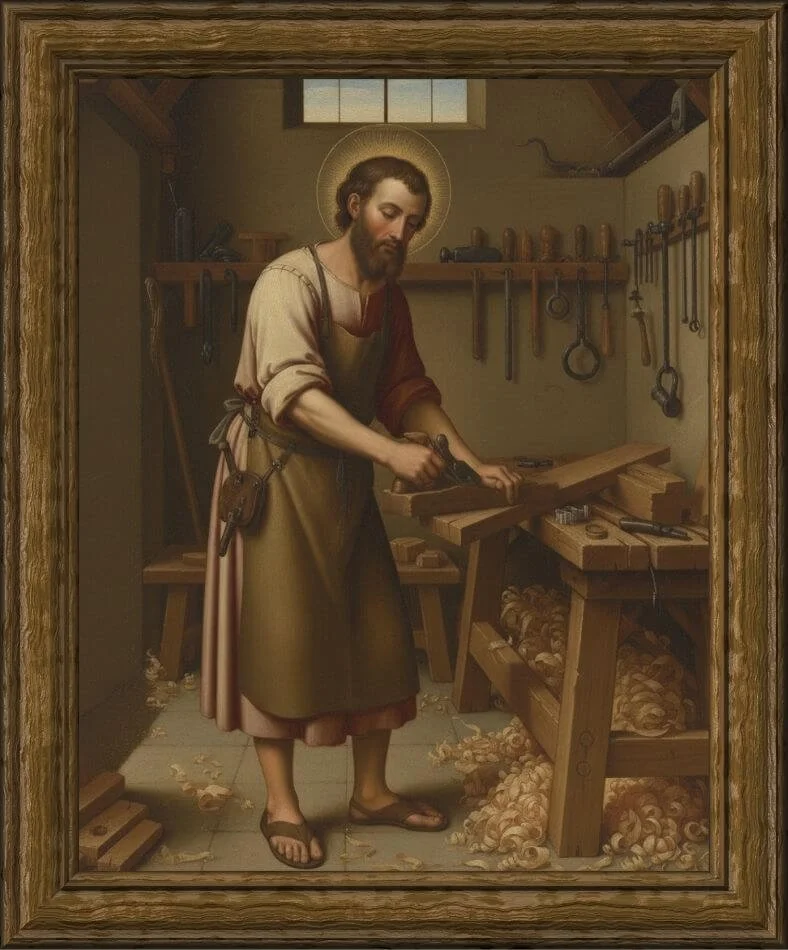
St. Joseph was a tekton—a builder or carpenter. He worked with his hands. Whether you are working in an office, on a ranch, in a shop, or managing a home, offer your labor to God this month. Before you start a task, say a quick prayer: "St. Joseph, help me do this work well for the glory of God."
2. The St. Joseph Day Mass (March 19)
March 19th is the Solemnity of St. Joseph. It is a day of great celebration. If you can, try to attend daily Mass at St. Anthony or OLP. If you can't make it to church, light a candle at home and ask St. Joseph to look after the material needs of our parish—our bills, our repairs, and our resources.
3. "Go to Joseph"
There is an old tradition in the Church: when you have a difficult problem that seems impossible to solve, you "Go to Joseph." He fixed problems for the Holy Family; he can help fix yours. Write down your worries on a slip of paper and place it under a statue or picture of St. Joseph in your home. Let him worry about it for a while.
A Prayer for March
O St. Joseph, whose protection is so great, so strong, and so immediate before the throne of God, I place in you all my interests and desires.
O St. Joseph, do assist me by your powerful intercession, and obtain for me from your Divine Son all spiritual blessings. You who were the provider for the Holy Family, Watch over our homes in Elmendorf and Sasamco. Help us to work with dignity, To love with fidelity, And to rest in God’s will.
Amen.
A prayer for the protection of our work and families.
A Model of Faith, Obedience, and Quiet Strength
Model of Faith
When the angel appeared to him in a dream and told him to take Mary as his wife, Joseph's faith overcame his fear and confusion. He trusted God completely and did as he was asked.

Model of Obedience
From the sudden flight into Egypt to the return to Nazareth, Joseph's life was a series of immediate and selfless "yes" answers to God's commands, protecting Jesus from all harm.
Model of Humility
He led a hidden, simple life as a carpenter. He sought no recognition or honour, content to perform his sacred duty in the quiet of his home and workshop. He teaches us the profound dignity of our daily work when it is offered to God.
Additional Discussion
Catholic practices during March, the Month of St. Joseph, honor him as protector of the Church, emphasizing his virtues as a father, worker, and guardian of the Holy Family, especially through the Solemnity of St. Joseph on March 19th, featuring special prayers (like the Seven Sorrows & Joys), meatless St. Joseph Tables with symbolic foods (fava beans), and devotions to his hidden, faithful life. Origins stem from Sicilian famine prayers, leading to vibrant traditions, while current practice focuses on his intercession, role model for men, and "ordinary" heroism, especially inspired by Pope Francis.
Origins of the Devotion
Sicilian Famine:
The tradition of honoring St. Joseph in March began in medieval Sicily during a severe drought and famine, with people praying to him for help.
Answered Prayers & Gratitude:
When rains returned, Sicilians offered food in thanksgiving, creating the elaborate "St. Joseph Tables," a tradition that spread to the U.S..
Liturgical Growth:
While local veneration existed earlier, Pope Pius IX declared St. Joseph Patron of the Universal Church in 1870, leading to greater liturgical prominence.
Key Practices During March
Solemnity of St. Joseph (March 19):
A major feast day, often a break from Lent's austerity, celebrating him as the Husband of Mary, Foster Father of Jesus, and Patron of the Church.
St. Joseph Tables/Altars:
Elaborate displays of food (meatless during Lent), often with lilies, candles, and a statue, serving the poor as an act of charity.
Fava Beans:
A staple of the tables, symbolizing the food that saved the Sicilians, believed to bring good luck.
Special Prayers:
Devotions often include the Litany of St. Joseph, prayers for the Seven Sorrows and Seven Joys, and meditations on his virtues.
Modeling Nazareth:
The goal is to make the home a "school of the Gospel," like Nazareth, emphasizing work, play, and faith together.
St. Joseph's Bread:
Braided loaves in the shape of a cross or staff, found in some communities like Detroit's "Little Italy".
Contemporary Catholic Focus
Patron of Workers & Fathers:
Honored as the model for laborers, fathers, and husbands, reflecting his quiet, dutiful life.
"Hidden" Heroism:
Pope Francis emphasized Joseph as an example of silent, hidden strength, a model for ordinary people, especially during the pandemic.
Spiritual Fatherhood:
Catholics turn to him for protection and guidance, invoking him as "Terror of Demons" and "Guardian of the Holy Family".
Core Message
The core message of March’s devotion to Saint Joseph is that holiness is found in humble, silent, and faithful obedience to God’s plan within the ordinary duties of daily life. As the Patron of the Universal Church, St. Joseph serves as a model of courageous protection and provider for the family, emphasizing that even the most hidden and manual labor can be an act of profound spiritual service. Ultimately, the devotion calls the faithful to "Go to Joseph" (Ite ad Ioseph) for intercession, recognizing him as a powerful guardian who leads believers closer to Christ through his example of righteousness, purity, and and trust in Divine Providence.