JANUARY
The Holy Name of Jesus
As we begin a new calendar year, the Church invites us to place the name of Jesus at the center of our thoughts and speech. This month is dedicated to honoring the profound power and authority of the Holy Name, which signifies our salvation and serves as a spiritual shield for all who invoke it with faith.
"Blessed be the name of the Lord, from this time forth and forevermore."
~Psalm 113:2
As the calendar turns and we face a new year in Elmendorf and Saspamco, the Church gives us the most powerful tool in our spiritual arsenal: The Most Holy Name of Jesus.
In our culture and community, names mean something. They carry heritage, reputation, and identity. But the Name of Jesus is different. It is not just a label; it is a prayer in itself. When we dedicate January to His Holy Name, we are placing our families, our work, and our parish under His direct protection for the year ahead.
The Teaching: God Saves
The Catechism of the Catholic Church teaches us that the name "Jesus" signifies that the very name of God is present in the person of his Son.
We believe that the name of Jesus is the only name that contains the presence it signifies. When we speak His name with faith, we are not just recalling a historical figure; we are invoking the saving power of God right here, right now. As the Catechism beautifully reminds us, "The name of Jesus is at the heart of Christian prayer" (CCC 435).
"Jesus means in Hebrew: 'God saves.' At the annunciation, the angel Gabriel gave him the name Jesus as his proper name, which expresses both his identity and his mission." (CCC 430)
The Scripture: Power & Humility
St. Paul reminds us in his letter to the Philippians that the Name was not given lightly. It was earned through the humility of the Cross.
Whether we are at Mass at St. Anthony or praying a quiet rosary at OLP, we continue this biblical tradition. You may notice some of our older parishioners still bow their heads slightly whenever the name "Jesus" is spoken. It is a small gesture, but a mighty act of faith.
"Therefore God also has highly exalted Him and given Him the name which is above every name, that at the name of Jesus every knee should bow, of those in heaven, and of those on earth, and of those under the earth." (Philippians 2:9-10)
Living the Faith: How to Observe this Month
Here in San Antonio, we know that faith isn't just for Sunday morning; it's for the kitchen table, the job site, and the classroom. Here is how you can honor the Holy Name this January:
1. The Morning Offering
Before your feet hit the floor in the morning, make the Name of Jesus the first word on your lips. A simple aspiration like "Jesus, I trust in You" sets the tone for the entire day.
2. Spiritual Protection
When you feel anxiety, fear, or anger rising, invoke the Holy Name. It is a shield. As Acts 4:12 tells us, "There is no other name under heaven given among men by which we must be saved."
3. The IHS Symbol
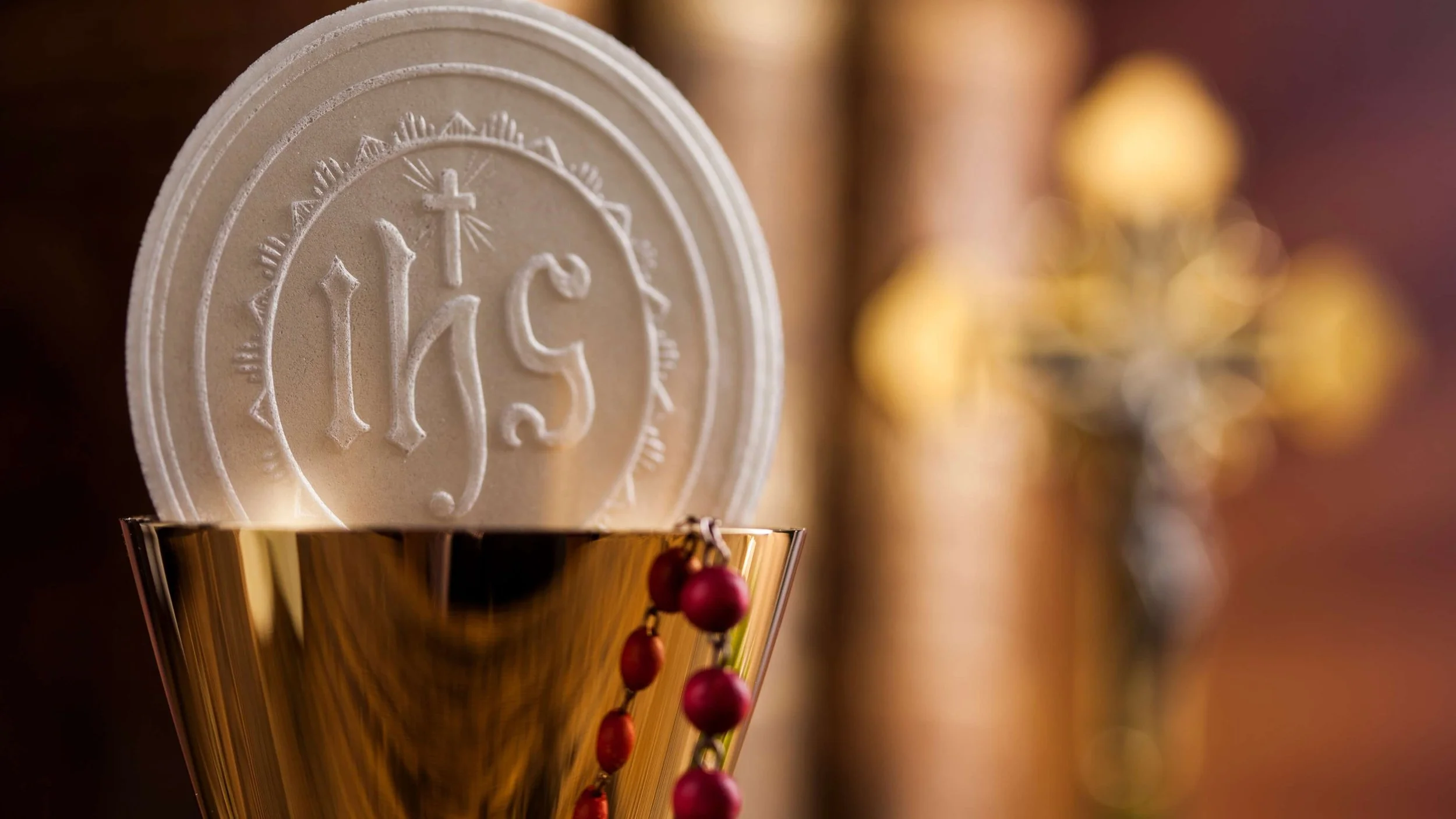
You might see the letters IHS on our vestments or altar cloths. This is a shortened form of the Greek word for Jesus (IHSOUS). This month, look for this symbol in our church as a reminder that He is the center of our worship.
A Prayer for January
O Good Jesus, according to Your infinite mercy, We ask You to write Your Name upon our hearts. Be our strength in work, Our comfort in rest, And our protection in times of trial.
May the Most Holy Name of Jesus be the light of our home and the joy of our parish family. Jesus, Savior of the world, have mercy on us.
Amen.
Pray this with your family before dinner or at the end of the day.
Additional Discussion
Origins and Current Practices
The Catholic devotion to the Holy Name of Jesus in January has roots in medieval celebrations, popularized by St. Bernardine of Siena using the "IHS" monogram, and was extended universally in 1721 before being reformed and reinstated to January 3rd, an optional memorial, by Pope John Paul II, focusing on the power of Jesus' name for salvation, protection, and grace through prayer, bowing the head, and devotion. Practices involve honoring Jesus' name, avoiding blasphemy, using the IHS symbol, and praying special prayers like the Jesus Prayer, especially during January, a month dedicated to this devotion.
Origins of the Devotion
Early Roots:
Veneration of the name grew from early Christian practices, with the name Jesus (meaning "Yahweh saves") being central to salvation.
St. Bernardine of Siena:
The 15th-century Franciscan preacher popularized the devotion, promoting the monogram "IHS" (from the Greek Iesous), encouraging its use on plaques and in public spaces.
Church Recognition:
The feast was approved by Pope Sixtus IV, granted to the Franciscans in 1530, and extended to the whole Church by Pope Innocent XIII in 1721.
Liturgical Changes:
The feast was removed from the calendar in 1969 but reinstated by Pope John Paul II as an optional memorial on January 3rd, the day after the Solemnity of Mary, Mother of God, tying it to the octave of Christmas.
Current Catholic Practices in January
Feast Day (Jan 3):
An optional memorial with specific Mass readings and prayers focusing on the name's power.
Month-Long Devotion:
January is dedicated to the Holy Name, encouraging deeper reflection and prayer.
Honoring the Name:
Bowing the head: A traditional sign of reverence when hearing or saying "Jesus," echoing Philippians 2:10 ("at the name of Jesus every knee should bow").
Reparation: Making acts of love or prayer (like the "Jesus Prayer") when hearing the name blasphemed.
Using the IHS monogram: Displaying or using the abbreviation for Jesus.
Prayers:
Reciting the Litany of the Holy Name or the Jesus Prayer ("Lord Jesus Christ, Son of God, have mercy on me, a sinner").
Sacramental Use:
Invoking the name in blessings, sacraments, and exorcisms, recognizing its power for healing, protection, and grace.
Additional Discussion
Imagery & Symbolism
Imagery for the Holy Name of Jesus centers on sacred monograms like IHS (or IHC) and Chi-Rho (XP), representing Jesus's name in Greek, symbolizing His divinity, salvation, and victory, alongside concepts of bowing knees, the Fish (Ichthys) for His identity as "Jesus Christ, Son of God, Savior," and themes of universal adoration and power. Visuals often depict angels adoring the name, the name within a sunburst or heart, or linked to the cross and resurrection.
Key Symbols & Meanings
IHS/IHC (Christogram):
Most common; first three letters of Jesus (ΙΗΣΟΥΣ) in Greek (Iota-Eta-Sigma). Interpreted as Iesus Hominum Salvator (Jesus, Savior of Men) or In Hoc Signo Vinces (In this sign you will conquer).
Chi-Rho (XP):
Superimposition of the first two Greek letters (Chi & Rho) of "Christ" (Χριστός). A secret sign for early Christians, linked to Constantine's vision.
Ichthys (Fish):
Greek word for fish, formed from the initials of Iesous Christos Theou Huios Soter (Jesus Christ, Son of God, Savior). Symbolizes the early church, fishermen, and Jesus as the "Fisher of Men"
Common Imagery & Themes
Universal Adoration
Depictions of all creation (heaven, earth, hell) bowing or acknowledging the name, referencing Philippians 2:10-11.
Sunburst / Host
Often seen with IHS, suggesting Jesus as the Sun of Righteousness or the Eucharistic presence.
Preaching & Miracles
Images focus on His teachings and powerful acts.
Cross & Nails
The 'V' added to IHS can form three nails, linking the name to the Crucifixion and Resurrection.
Heart
The name inscribed in a heart symbolizes love for Jesus.
Devotional Practices & Related Symbols
Bowing
Bowing the head or knee when the name is spoken, a pious tradition.
The Ship (Barque)
Represents the Church guided by Christ (the Compass) through life's storms.
Core Message
The core message of January’s devotion to the Most Holy Name of Jesus is that the name itself—meaning "God Saves"—carries the living presence, power, and authority of the Savior. It presents the name as the primary source of salvation and a spiritual shield, calling for profound reverence and reparation for its misuse. Ultimately, January serves to center the believer’s life on the person of Jesus, recognizing his name as the "name above all names" through which all grace and mercy flow.